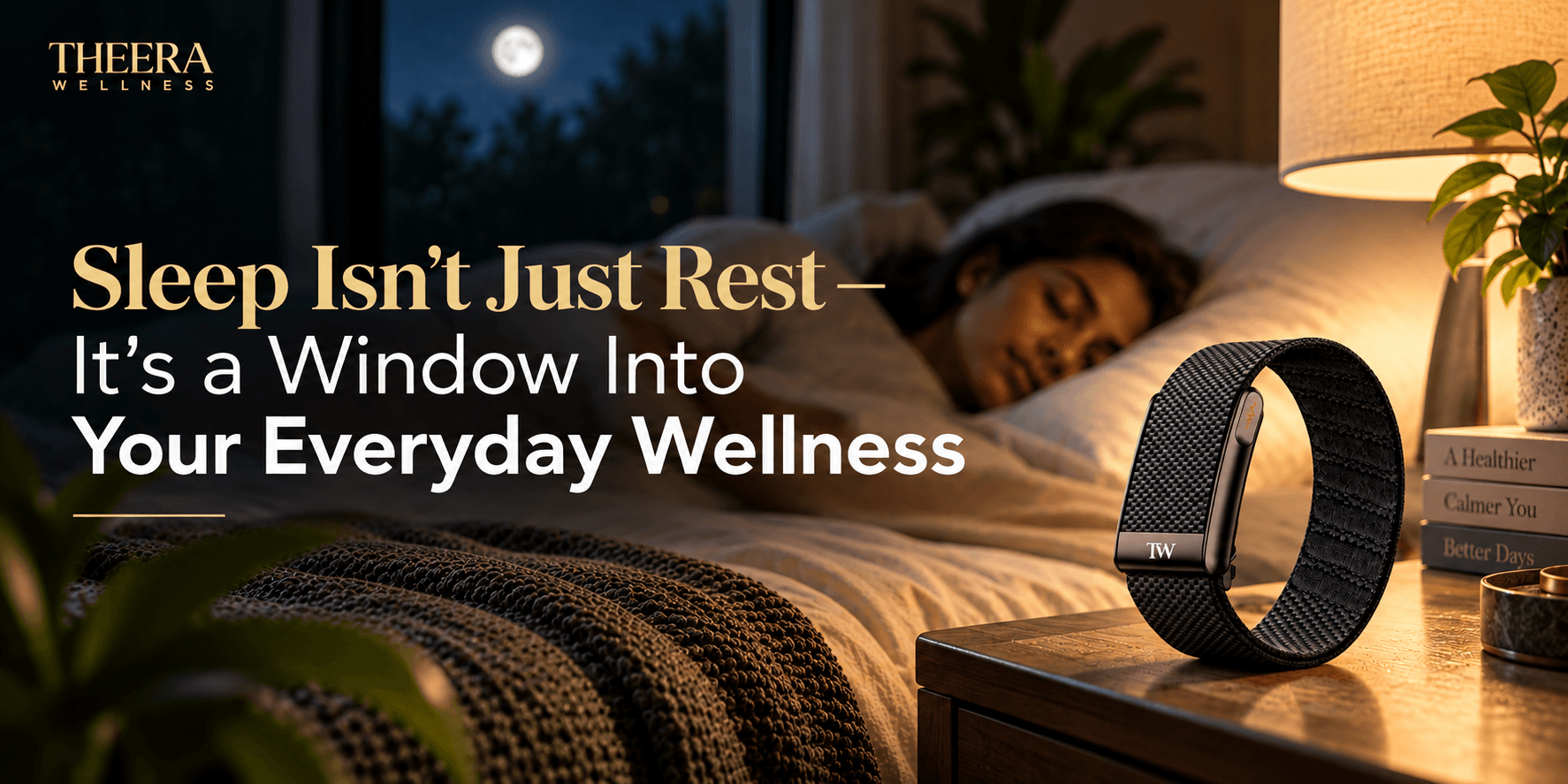
Sleep is often treated as simply the time when we rest at the end of the day. But sleep is closely connected with many aspects of everyday wellness. The way we sleep, how consistently we sleep and how our sleep patterns change can provide useful context about our daily routine.
Instead of looking at sleep as an isolated part of the day, it can be more useful to see it as one part of a larger picture that includes activity, recovery, stress and other wellness patterns.
1. Why Sleep Is More Than Just Rest
While you sleep, your body goes through different stages that support physical recovery, mental restoration and normal daily functioning. Your sleep routine can also be influenced by what happens during the rest of your day.
A busy schedule, intense physical activity, stress, late-night screen use or changes in your routine can all affect how you sleep. This is why simply asking “How many hours did I sleep?” may not always provide the complete picture.
For example, two people could both sleep for seven hours, but their sleep schedules and patterns may be completely different. One person may have a consistent bedtime and wake-up time, while the other may have a constantly changing routine.
Looking at sleep over a longer period can therefore provide more useful context than focusing on a single night.
2. What Your Sleep Patterns Can Reveal About Your Wellness
One night of poor sleep does not necessarily indicate a problem. Similarly, one particularly good night does not automatically mean that your overall sleep routine is healthy.
The more useful information often comes from patterns over time.
You may notice that your sleep duration changes when your daily activity increases. You might also notice that your sleep routine becomes irregular during busy periods or that your bedtime changes significantly on weekends.
Tracking these changes can help you become more aware of your own routine.
Sleep data can include information such as sleep duration, sleep timing and other sleep-related patterns. When observed consistently, these measurements can provide context alongside your daily activity and other wellness information.
The important point is to avoid treating one reading as a complete explanation of how you are doing. Your usual pattern provides the context.
3. How Poor Sleep Can Affect Your Day
Sleep and daytime activities are closely connected.
After a night of insufficient or disrupted sleep, some people may notice lower energy, difficulty concentrating or less motivation to stay active. Sleep can also influence how prepared you feel for the next day's routine.
The relationship works both ways. Your daytime habits can influence your sleep as well.
For example, physical activity during the day can be part of a healthy routine, while excessive evening screen time, irregular schedules or a stressful day may make it harder for some people to settle into their normal bedtime routine.
This is why sleep should not be viewed separately from the rest of your lifestyle.
A simple everyday example
Imagine someone who normally sleeps around 11 PM and wakes around 7 AM. During a particularly busy week, they start working late, spend more time on their phone at night and gradually move their bedtime to 1 AM.
They may still get some sleep every night, but their overall pattern has changed.
When they look back at their routine, the change in sleep timing may provide useful context for understanding why their days feel different.
The goal is not to blame one factor for every change. It is to recognise connections between different parts of your routine.
4. How Theera Tracks Your Sleep and Wellness
Theera Wellness takes a wellness-focused approach to everyday health tracking.
Theera Band brings sleep monitoring together with other wellness and activity metrics such as heart rate, HRV, SpO₂, activity, stress and body-temperature insights. Looking at these measurements together can provide a broader view of your everyday patterns.
For example, sleep information can be considered alongside your activity levels and other wellness measurements rather than being viewed completely on its own.
This approach makes the data more useful as a record of your routine. Instead of simply asking how long you slept last night, you can look at how your sleep patterns have changed over time and consider them alongside the rest of your daily activity.
The purpose of tracking is not to create a perfect score. It is to give you information that can help you become more aware of your own habits.
Theera's role is to bring different wellness signals together so that your everyday routine can be viewed as a bigger picture rather than as isolated numbers.
5. Turning Sleep Insights Into Better Daily Habits
The real value of sleep tracking comes from what you learn over time.
If you consistently notice that your sleep becomes shorter on days when you stay up late, that is useful information about your routine. If your bedtime changes significantly on weekends, you may also start to recognise how your schedule affects your overall consistency.
These observations can encourage simple changes.
You might try maintaining a more consistent bedtime, reducing unnecessary screen use before sleeping, creating a calmer evening routine or paying more attention to how your daytime activities affect your night.
The goal is not to become obsessed with sleep data. In fact, constantly checking numbers can sometimes make the process feel more complicated than it needs to be.
Instead, use the information as a reference point.
Look at your patterns over days and weeks. Combine the data with how you actually feel. If something changes consistently, it may be worth paying closer attention to your routine or discussing concerns with an appropriate healthcare professional.
The bigger picture
Sleep is only one part of everyday wellness.
Your activity, recovery, stress, heart rate and other measurements can provide additional context. When these different pieces are viewed together, you can develop a more complete understanding of your daily patterns.
Your sleep is not just a number showing how long you were in bed. It is one piece of information that can help you understand your everyday wellness.