What Is Non-Invasive Blood Glucose Monitoring?
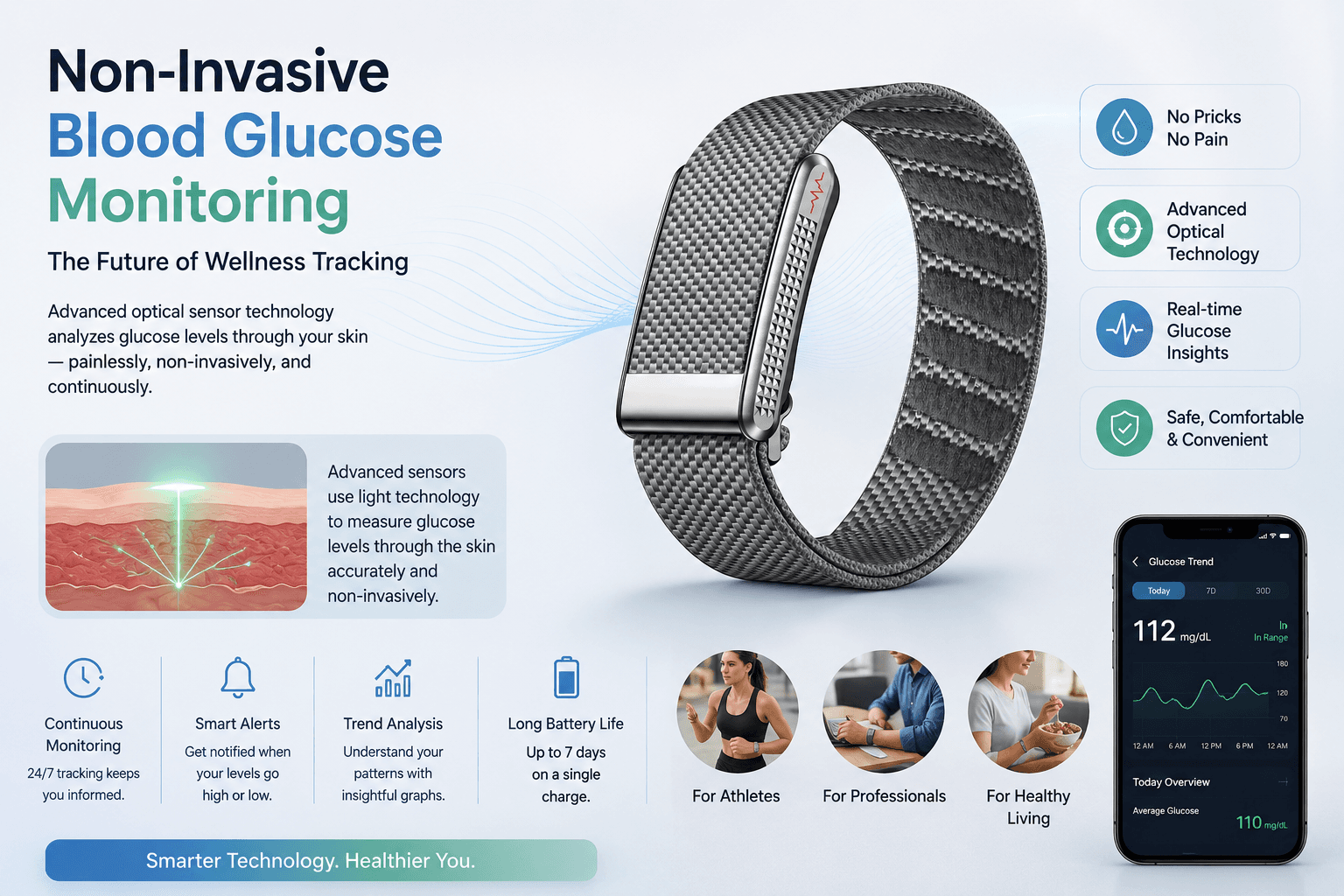
For decades, tracking blood glucose meant needles, test strips, and finger pricks. But a new wave of wearable technology is changing that. Non-invasive blood glucose monitoring uses optical sensors — light-based technology worn on the wrist or finger — to estimate glucose levels through the skin, without breaking it. This isn't just a convenience upgrade. It's a fundamental shift in how we understand our bodies in real time.
Why Blood Glucose Matters — Even If You're Not Diabetic
Most people associate blood glucose with diabetes management. But glucose is your body's primary fuel source, and its fluctuations affect every aspect of how you feel throughout the day. Here's what unstable blood glucose looks like in everyday life:
- Mid-afternoon energy crashes — that 3 PM slump isn't laziness, it's often a glucose dip
- Poor sleep quality — glucose spikes before bed can fragment your deep sleep cycles
- Brain fog and difficulty focusing — your brain runs almost entirely on glucose
- Mood swings and irritability — low glucose affects neurotransmitter balance
- Slower workout recovery — muscles rely on stable glucose for repair
Understanding your glucose patterns doesn't require a diagnosis. It requires awareness.
How Non-Invasive Sensing Works
The Theera Smart Band uses near-infrared (NIR) optical sensing to measure how light is absorbed and reflected through the tissue beneath your wrist. Glucose molecules interact with specific wavelengths of light differently than other molecules — this differential absorption gives the sensor a continuous, passive signal that reflects your glucose trends throughout the day and night.
Combined with skin temperature, heart rate, HRV, and SpO2 data, Theera builds a multi-signal picture of your metabolic state — not just a single number, but a pattern that tells a real story.
What You Can Learn From Your Glucose Trends
1. How Food Affects You Personally
The same meal can spike one person's glucose and barely affect another's. Seeing your own response helps you make smarter food choices — not based on generic advice, but on your own biology.
2. How Stress Raises Your Glucose
Cortisol — the stress hormone — directly raises blood glucose even without eating. Watching your glucose rise during a tense meeting or a hard conversation reveals the physical cost of mental stress.
3. How Sleep Stabilises (or Disrupts) Glucose
Poor sleep causes insulin resistance the next day. Theera tracks this loop — your overnight glucose stability, morning baseline, and how your sleep quality correlates with the next day's energy.
4. How Exercise Timing Changes Your Response
A 20-minute walk after a meal dramatically flattens the glucose curve for most people. Theera helps you see this in real time — making movement feel immediately rewarding, not abstract.
The Bigger Picture: Continuous Metabolic Awareness
Traditional health check-ups give you a snapshot — one glucose reading, one morning, fasting. That's like judging a movie by a single frame. Continuous glucose awareness gives you the full film. You see how your body responds across meals, sleep cycles, workouts, and stress events. Over weeks, patterns emerge that a quarterly blood test would never reveal.
This is the promise of non-invasive monitoring: not a medical device strapped to your wrist, but a quiet, continuous companion that helps you understand your own body better — so you can live in it better.
Tips to Support Stable Blood Glucose Naturally
While Theera helps you see your patterns, small daily habits can meaningfully improve your glucose stability:
- Eat protein and fibre before carbohydrates — the order of eating affects how fast glucose rises
- Walk for 10–20 minutes after meals — one of the most effective glucose-stabilising habits
- Prioritise 7–9 hours of sleep — sleep debt directly worsens insulin sensitivity
- Manage stress actively — breathwork, cold exposure, and rest all lower cortisol and stabilise glucose
- Stay hydrated — dehydration concentrates glucose in the bloodstream
What's Next for Theera
Non-invasive blood glucose monitoring represents one of the most anticipated additions to Theera's sensing.